2 hr 30 min
Little Havana Food Walking Tour with Tastings
- Expert local guide
- Small group
- Skip-the-line access
- Free cancellation
Little Havana Food and Walking Tour — Taste Cuban Miami
Walk Calle Ocho's storied blocks, savor hand-rolled cigars and pastelitos.
Compare fares, pick the fit — all bookings are mobile-voucher and eligible for free cancellation where shown.
2 hr 30 min
3 hr
2 hr
| Experience | Duration | Rating | Skip-the-line | Guide | Small group | Free cancel. | Price | |
|---|---|---|---|---|---|---|---|---|
|
Guided Experience
Most popular
Little Havana Food Walking Tour with Tastings
|
2 hr 30 min | ★ 4.9 | ✓ | ✓ | ✓ | ✓ | €62 | Book → |
|
Guided Experience
Little Havana Cuban Food & Culture Walking Tour
|
3 hr | ★ 4.8 | ✓ | ✓ | ✓ | ✓ | €61 | Book → |
|
Standard Entry
Little Havana Cultural Walking Experience
|
2 hr | ★ 4.9 | — | ✓ | ✓ | ✓ | €55 | Book → |
Hand-picked experiences loved by thousands of travelers
2 hours
Free Cancellation
Explore Miami's Cuban heart with a local guide who shares personal stories and heritage
2 hours
Free Cancellation
Taste your way through Miami's Cuban heart with coffee, sandwiches, and six authentic bites.
1 hour
Free Cancellation
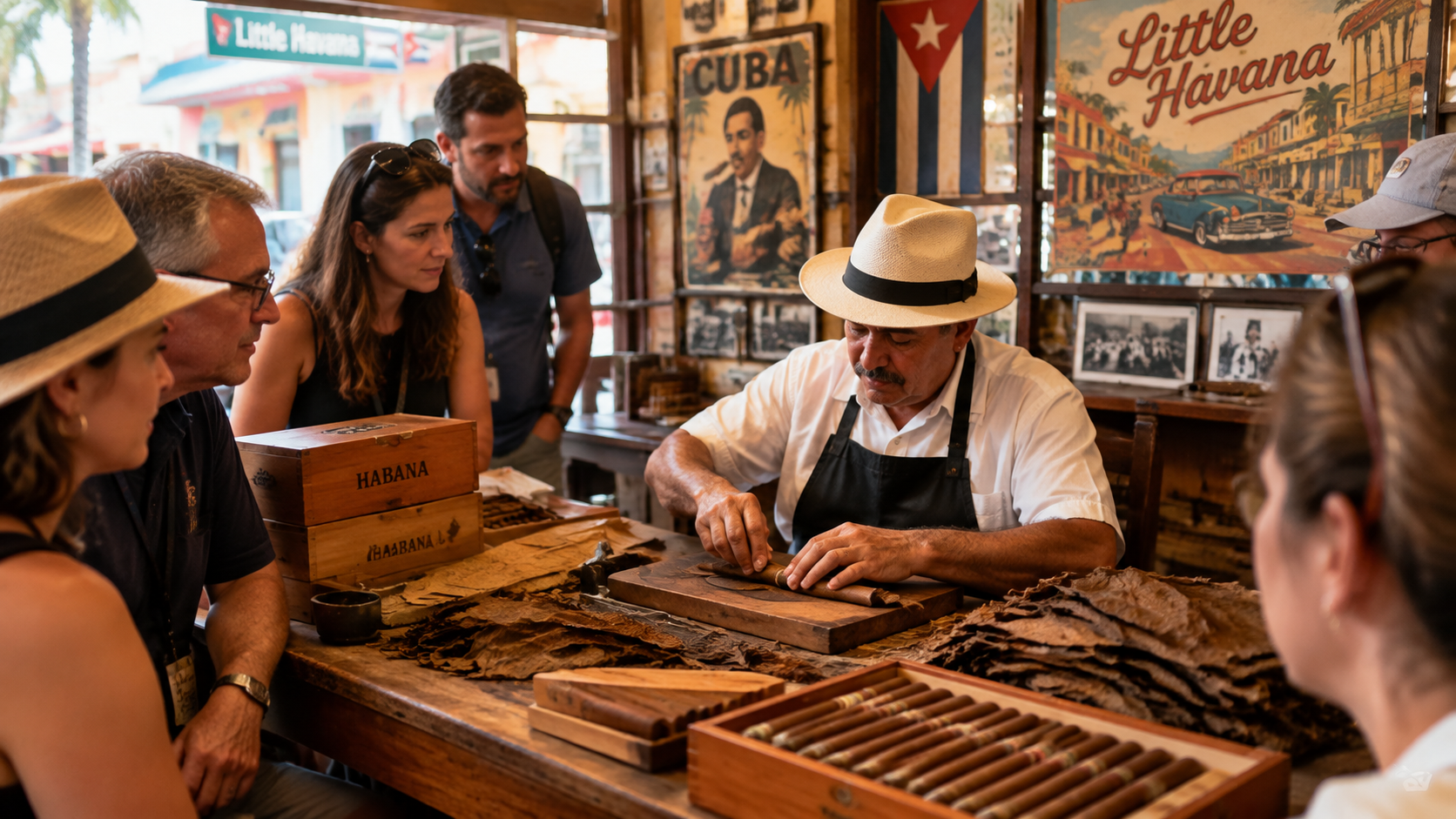
Step inside a working cigar workshop and trace tobacco's journey from seed to smoke in Miami's Cuban heart
2 hours 30 minutes
Free Cancellation
Explore Miami's Cuban heart through authentic cuisine, cigar craft, and neighborhood stories
2 hours
Free Cancellation
Savor authentic Cuban flavors and history on an intimate culinary journey through Miami's most vibrant neighborhood.
2 hours
Free Cancellation
Discover Miami's Cuban heart with a French-speaking guide in an intimate group of 10 or fewer.
4 hours
Free Cancellation
Discover three of Miami's most vibrant neighborhoods in one fast-paced, guided small-group experience.
Meet at the designated landmark for a briefing
Sample authentic bites at Cuban establishments
Explore murals and cultural monuments
Conclude the experience near Calle Ocho
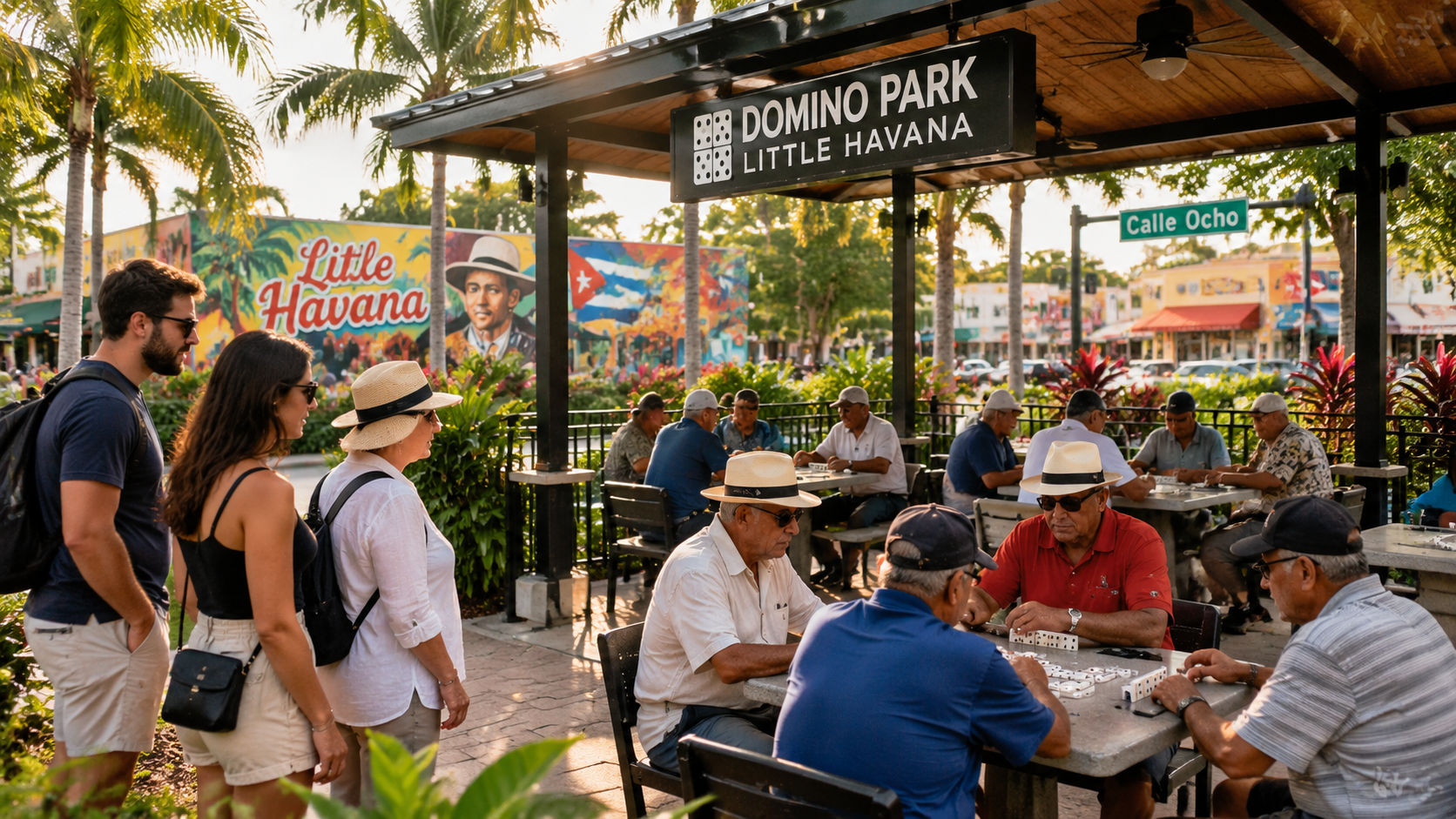
This square is the heart of the community where local players gather daily to play dominoes. You will see matches that have been ongoing for decades.
Modeled after the Hollywood version, this landmark features stars honoring Cuban stars and artists. It stretches along the sidewalk of the main street.
Opened in 1926, this Art Deco landmark remains a cultural beacon for the area. It serves as a historic hub for cinema and local events.
This solemn landmark features an eternal flame dedicated to those involved in the 1961 invasion. It is a key site for historical reflection.
Named after a Cuban independence hero, this park serves as the official name for the famous domino gathering spot. It is a social anchor for residents.
You meet your guide near the corner of Calle Ocho and 15th Avenue, where the sidewalk hums with foot traffic and the smell of frying dough pulls you toward your first stop.
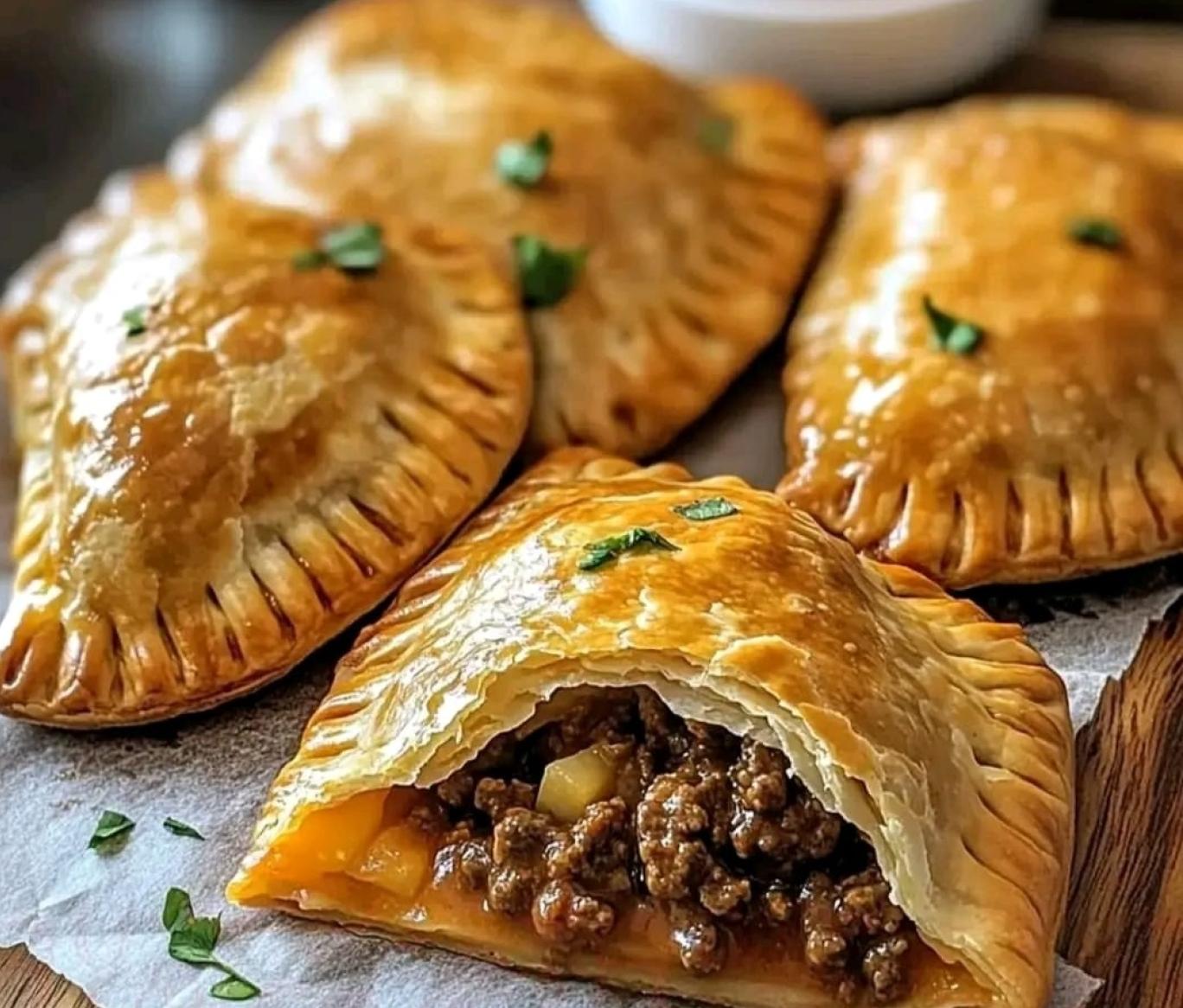
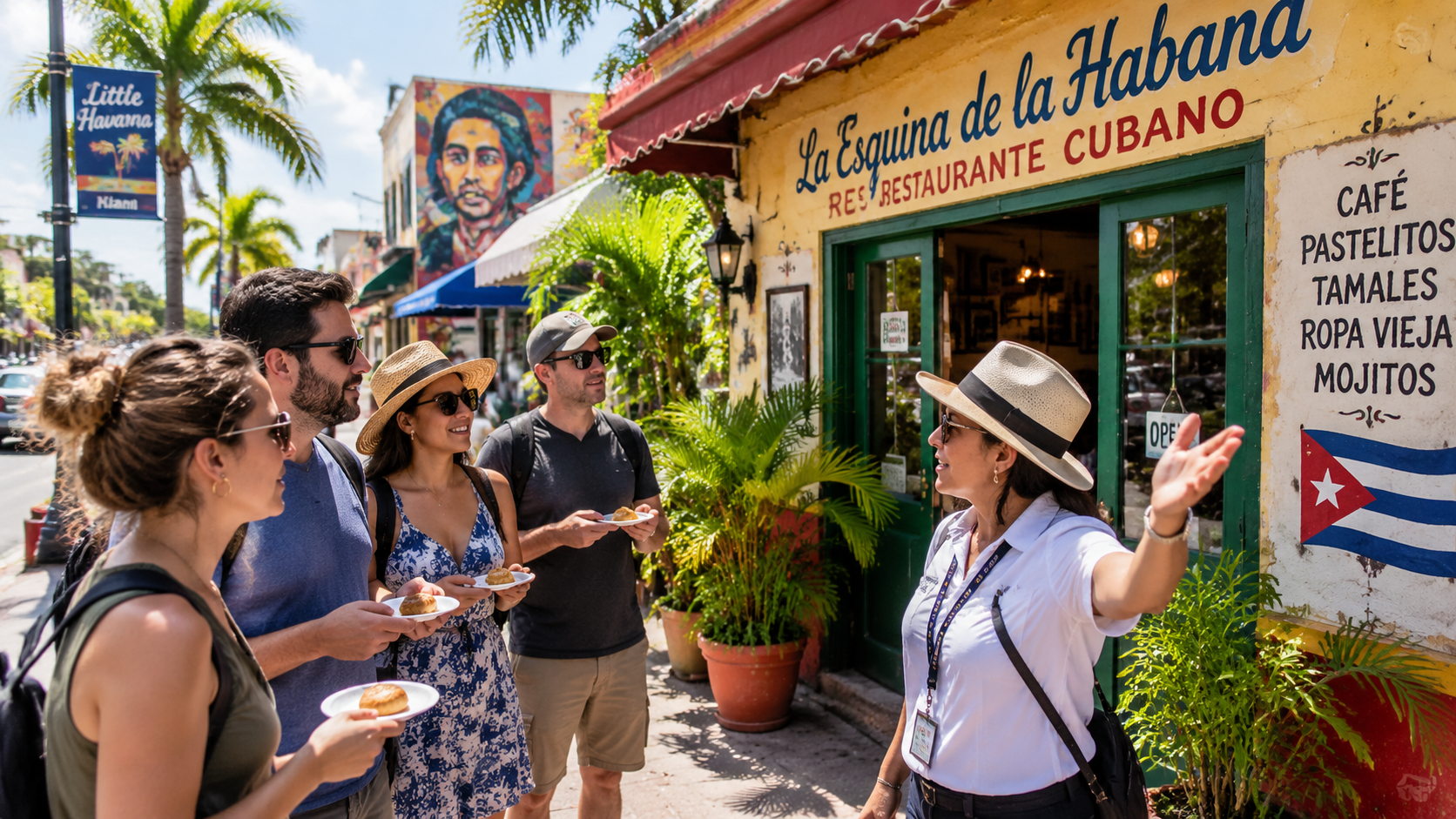
Inside a pastelito bakery, you watch a baker slide trays of guava-filled crescents from a decades-old oven, then hand you one still warm enough to scald your fingertips. The pastry shatters when you bite, releasing a sweet-tart filling that coats your palate as your guide explains the economics of exile baking — how these recipes crossed the Straits of Florida in memory alone, no written measurements.
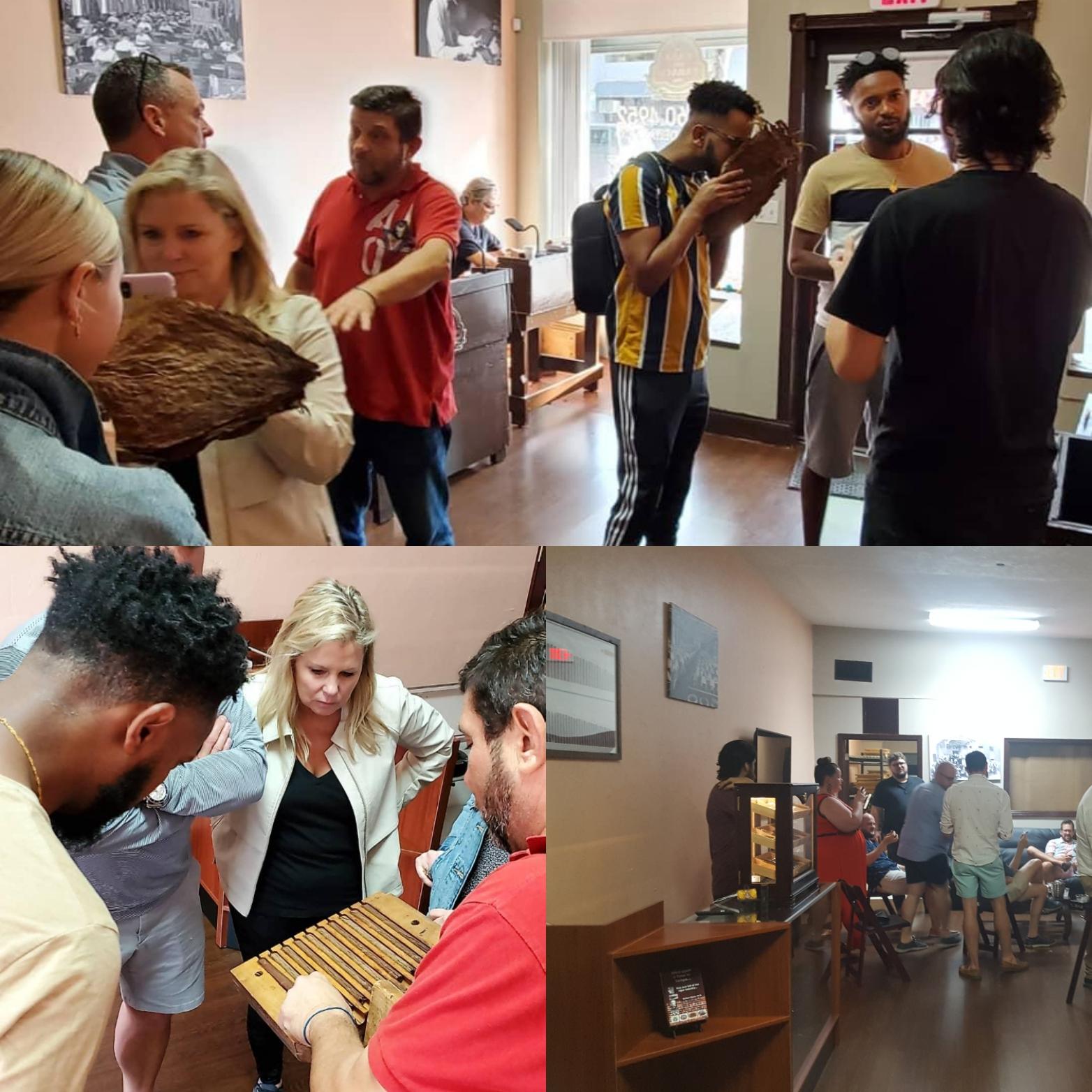
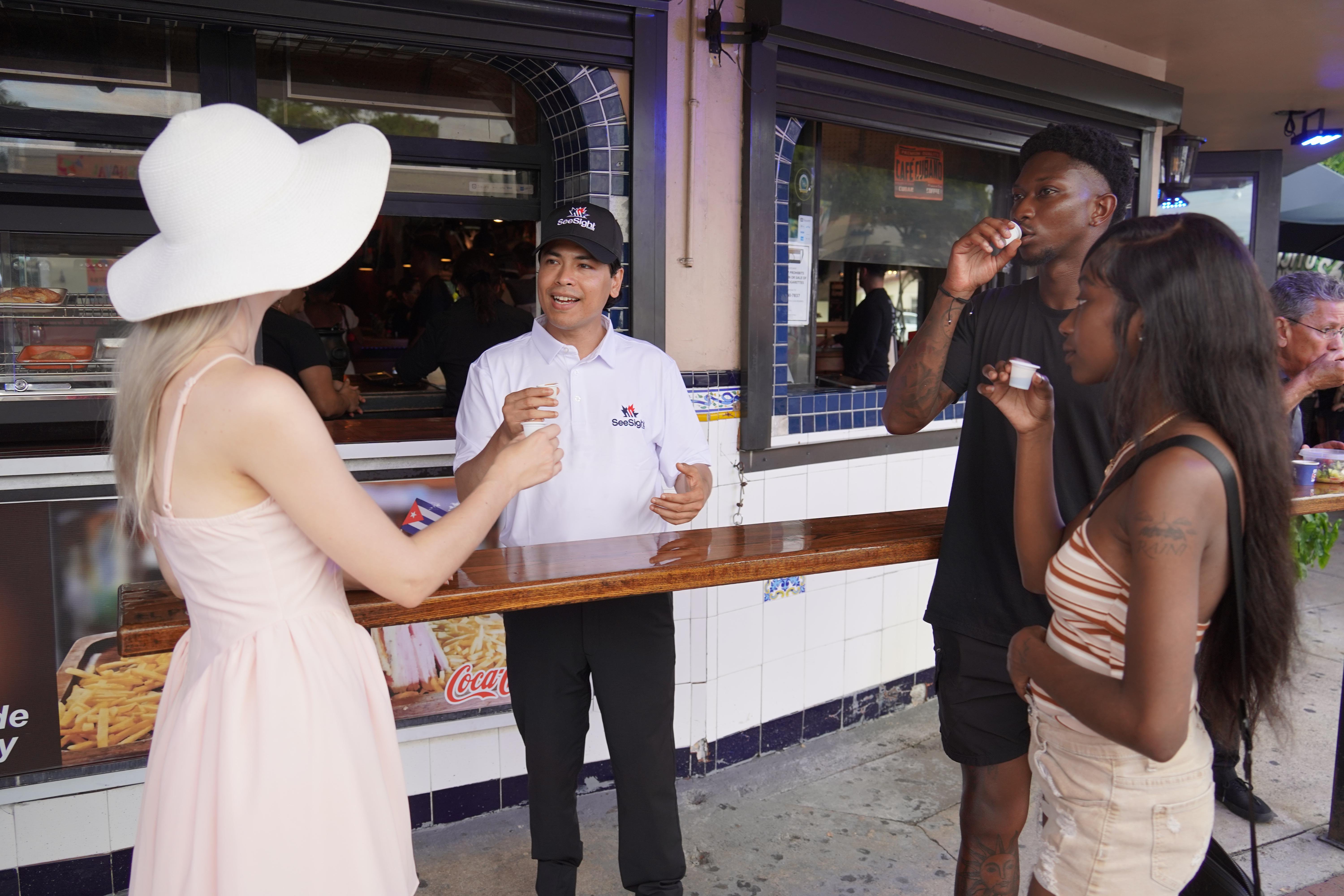
Two blocks west, you step into a cigar shop where a rollero sits at a wooden table, his hands moving in practiced rhythm as he wraps a Nicaraguan leaf around Cuban-seed filler. He offers you the unlit cigar to smell, and the earthy funk fills your nostrils as he describes the fermentation process. You pocket the cigar and follow your group to a ventanita window, where you down a thimble of cortadito — espresso cut with steamed milk and enough sugar to make your teeth ache — while elderly men argue over domino tiles at a nearby table. The miami little havana food walking tour with tastings continues south, past a mural of Celia Cruz in full sequined glory, to a family-run restaurant where you taste lechón asado, the pork so tender it dissolves before you can chew.
All the details about your upcoming adventure in one place
Experience the vibrant heart of Cuban culture through this little havana food and walking tour in miami that guides you past iconic murals, cigar shops, and authentic eateries along Calle Ocho. Sample guava pastries, cortadito coffee, and traditional Cuban sandwiches while learning about the neighborhood's evolution from local guides. Little havana food and walking tour in miami tickets include all tastings and access to family-run bakeries and fruit stands that have anchored the community for decades.
In 1960, when the first wave of Cuban exiles arrived in Miami, Calle Ocho was a quiet residential artery lined with bungalows and modest storefronts. Within a decade, it had become the beating heart of a displaced community determined to transplant Havana's cafés, tobacco shops, and social rhythms to American soil.
The street's transformation was not planned by urban designers but driven by the granular decisions of small-business owners who hung hand-painted signs, installed espresso machines, and opened their doors to a diaspora craving the textures of home. By the 1980s, Little Havana had crystallized into a cultural enclave recognized across the Americas, its identity anchored by the daily rituals of domino games, ventanita coffee counters, and the scent of roasting pork drifting from family-run ventanas.
Today, the neighborhood remains a living archive of Cuban-American heritage, though its demographic composition has grown more complex. Nicaraguan, Honduran, and Colombian immigrants have layered their own traditions onto the streetscape, creating a hybrid Latin Quarter that reflects broader shifts in Miami's migration patterns. Yet the Cuban imprint endures in the architecture of the experience: the pastelito windows that open at dawn, the hand-rolled cigars crafted in street-facing rollerías, the murals commemorating Celia Cruz and José Martí. The little havana food and walking tour in miami has become the primary conduit through which visitors decode this layered identity, offering structured access to businesses that might otherwise appear inscrutable to outsiders unfamiliar with the codes of Cuban hospitality.
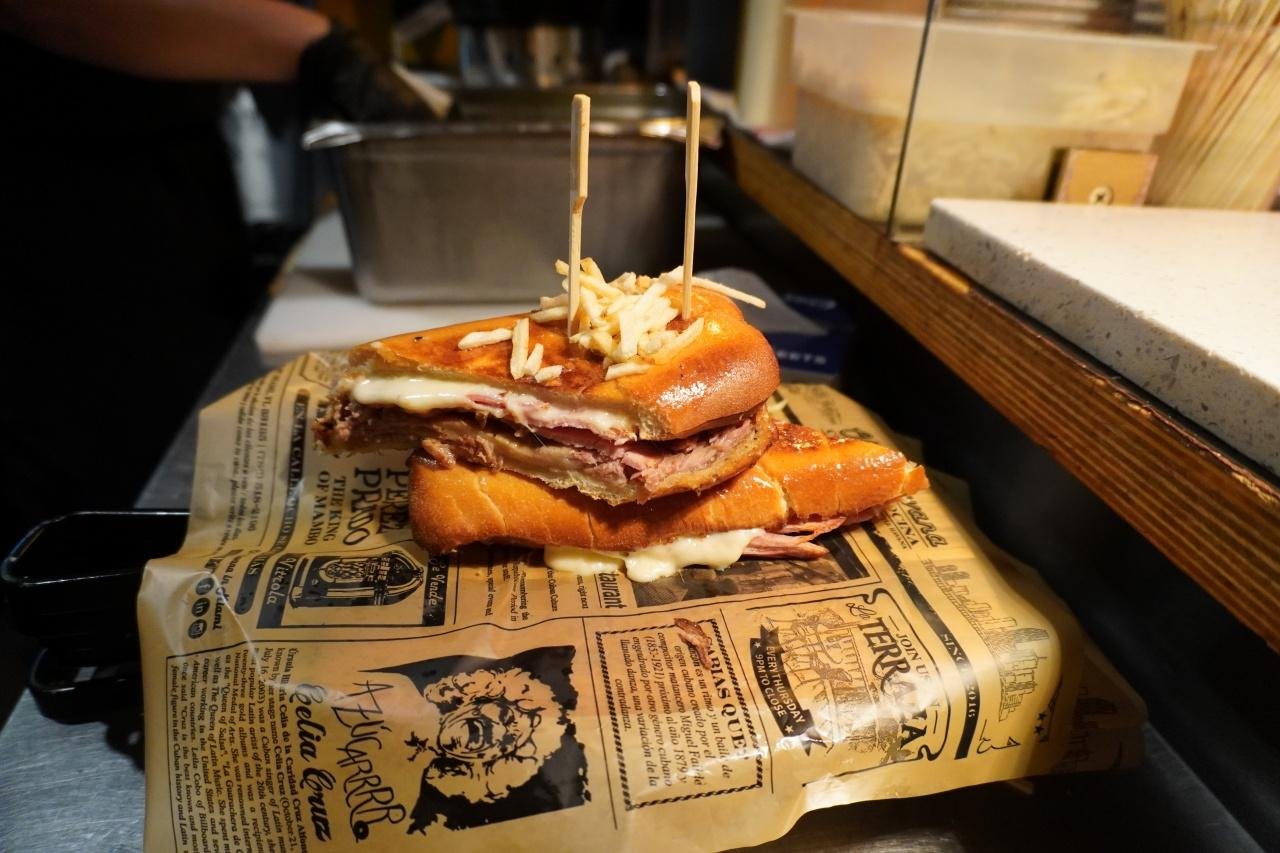
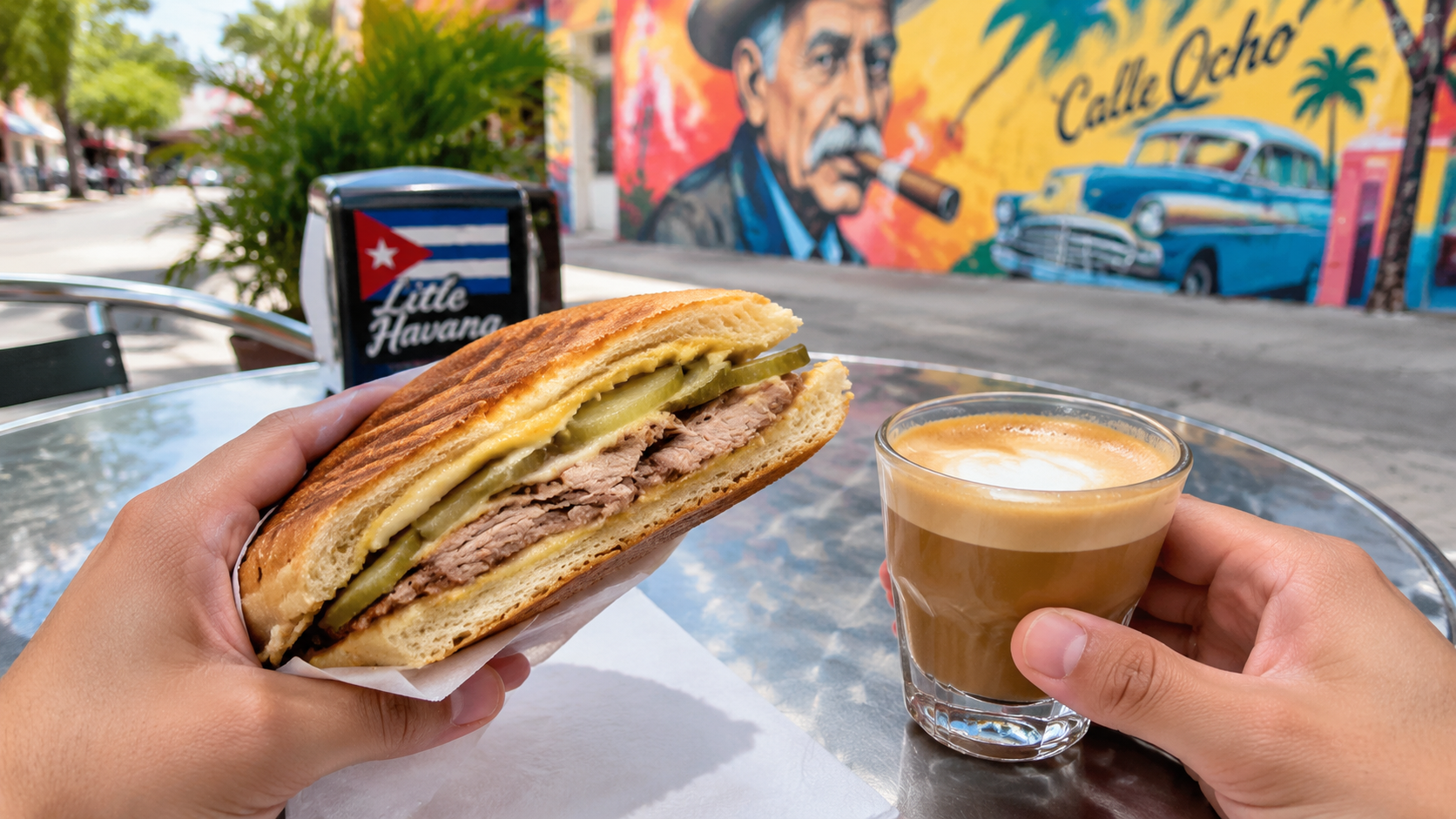
The culinary landscape here is not haute cuisine but vernacular sustenance, dishes designed for daily consumption rather than special occasions. A guava pastry eaten standing at a counter, a thimble of cortadito sipped while watching dominoes click on marble tables, a media noche pressed between iron plates until the ham and cheese fuse with pickles and mustard — these are the textures that define the little havana food and cultural walking tour in miami. The food functions as both nourishment and mnemonic device, each bite recalling a geography most visitors will never see. What to eat in little havana miami becomes less a question of individual preference than an initiation into a collective memory, where the act of tasting is inseparable from the act of witnessing a community's self-preservation.

The food functions as both nourishment and mnemonic device, each bite recalling a geography most visitors will never see.
Casual attire is recommended for the little havana food and walking tour in miami. Wear comfortable walking shoes to navigate the historic pavement of Calle Ocho.
Small personal bags are permitted on this cultural excursion. Large luggage should be stored at your accommodation as there is no secure storage provided on the route.
Photography is encouraged throughout the neighborhood landmarks. Please respect the privacy of local business owners and residents while capturing the colorful street art.
The walking route is suitable for children who can manage a multi-stop stroll. Bringing strollers is possible, though some interior dining spaces may be tight.
The area consists of public sidewalks and storefronts. While most venues are accessible, some older buildings may have small steps at the entry.
The little havana food and walking tour in miami includes curated tastings at specific vendors. Outside food or drinks are discouraged to ensure you experience the authentic menu items.
Operating Hours
00:00–23:59
Address
Calle Ocho (SW 8th Street), Little Havana, Miami, FL 33135
Accessibility
Sidewalks are paved but can be crowded during peak hours
Best Arrival
10:00–16:00
Neighborhood
Little Havana
Public transport · 60 min · Varies by route
Use the Miami-Dade Transit bus routes serving SW 8th Street.
Car · 40 min · Variable costs
Street parking is available, but ride-sharing is recommended to avoid limited spots.
Ticketed participants must cancel at least 24 hours prior to the start of the little havana food and walking tour in miami to receive a full refund. No refunds are provided for late arrivals or no-shows.
Recommended time
2.5–3 hours
A typical little havana food and walking tour in miami requires about 3 hours to fully appreciate the local culture and culinary offerings. We recommend arriving between 10:00–16:00 to align with the peak activity of ventanitas and shops, avoiding the later evening rush when dining spots become significantly busier. Booking your little havana food and walking tour in miami tickets in advance is wise, as these excursions frequently sell out regardless of the day. Whether you are exploring independently or via a little havana food and walking tour in miami tour, keeping to the heart of Calle Ocho ensures you experience the most authentic landmarks.
Crowd levels through the day
Weather · crowds · average price — dots go green to amber to red as each metric rises.
Mild temperatures make this a prime time for walking tours in Miami with comfortable outdoor conditions.
Expect high humidity and afternoon showers, so plan your activities early in the day.
From September to November, the weather cools, ideal for visiting Miami landmarks on foot.
The dry season features the most pleasant weather, resulting in higher visitor attendance.
Carry water to combat the Florida sun during your walk.
Little Havana emerged in the 1960s when the first wave of Cuban exiles fleeing Fidel Castro's revolution settled along Southwest Eighth Street, transforming a quiet residential district into the spiritual heart of the Cuban diaspora. The neighborhood's transformation accelerated after the Bay of Pigs invasion in 1961 and the Cuban Missile Crisis in 1962, as more than 200,000 Cubans arrived in Miami seeking refuge. Calle Ocho became the commercial spine where exiles rebuilt their lives, opening cigar factories, cafeterias serving café Cubano, and botanicas that preserved Santería traditions. The street's cultural significance was formalized in 1978 when local entrepreneur Leslie Pantin organized the first Calle Ocho Festival, attracting over 100,000 attendees and cementing the neighborhood's identity as a Cuban cultural enclave. By the 1980s, Little Havana faced demographic shifts as the Mariel boatlift brought 125,000 new arrivals in a single year, straining resources and altering the neighborhood's economic landscape. The area experienced urban decay through the 1990s as younger generations moved to suburban Hialeah and Westchester, leaving aging storefronts and declining property values. Preservation efforts began in earnest during the early 2000s when the Miami Design Preservation League and local activists successfully lobbied for historic designation of key Calle Ocho blocks. The Tower Theater, built in 1926 and once the neighborhood's entertainment anchor, reopened in 2008 as a city-owned cultural center after decades of abandonment. Today, the little havana food and walking tour in miami showcases this layered history through intact landmarks like Domino Park, established in 1976 as a gathering space for elderly Cuban men, and the Cuban Memorial Boulevard with monuments honoring Brigade 2506 veterans. The neighborhood has absorbed Central American immigrants since the 1980s, creating a pan-Latin identity while maintaining its Cuban foundation. Walking tours along Calle Ocho now pass murals depicting Cuban patriots José Martí and Antonio Maceo, family-run ventanitas serving cortaditos, and the Ball & Chain nightclub, revived in 2014 to echo its 1930s jazz-era glamour. Food and cultural walking experiences preserve oral histories from original exiles while introducing visitors to the guava pastries, ropa vieja, and hand-rolled cigars that define the neighborhood's sensory landscape.
Cuban exiles fleeing Castro's revolution settle along SW Eighth Street, establishing the neighborhood's foundational Cuban identity.
Leslie Pantin launches the first Calle Ocho Festival, drawing 100,000 attendees and formalizing the street's cultural significance.
The Mariel boatlift brings 125,000 Cubans to Miami in five months, dramatically reshaping Little Havana's demographics and economy.
Preservationists secure historic designation for Calle Ocho blocks, protecting landmarks like Domino Park and the Cuban Memorial Boulevard.
The restored Tower Theater reopens as a city-owned cultural venue after decades of neglect.
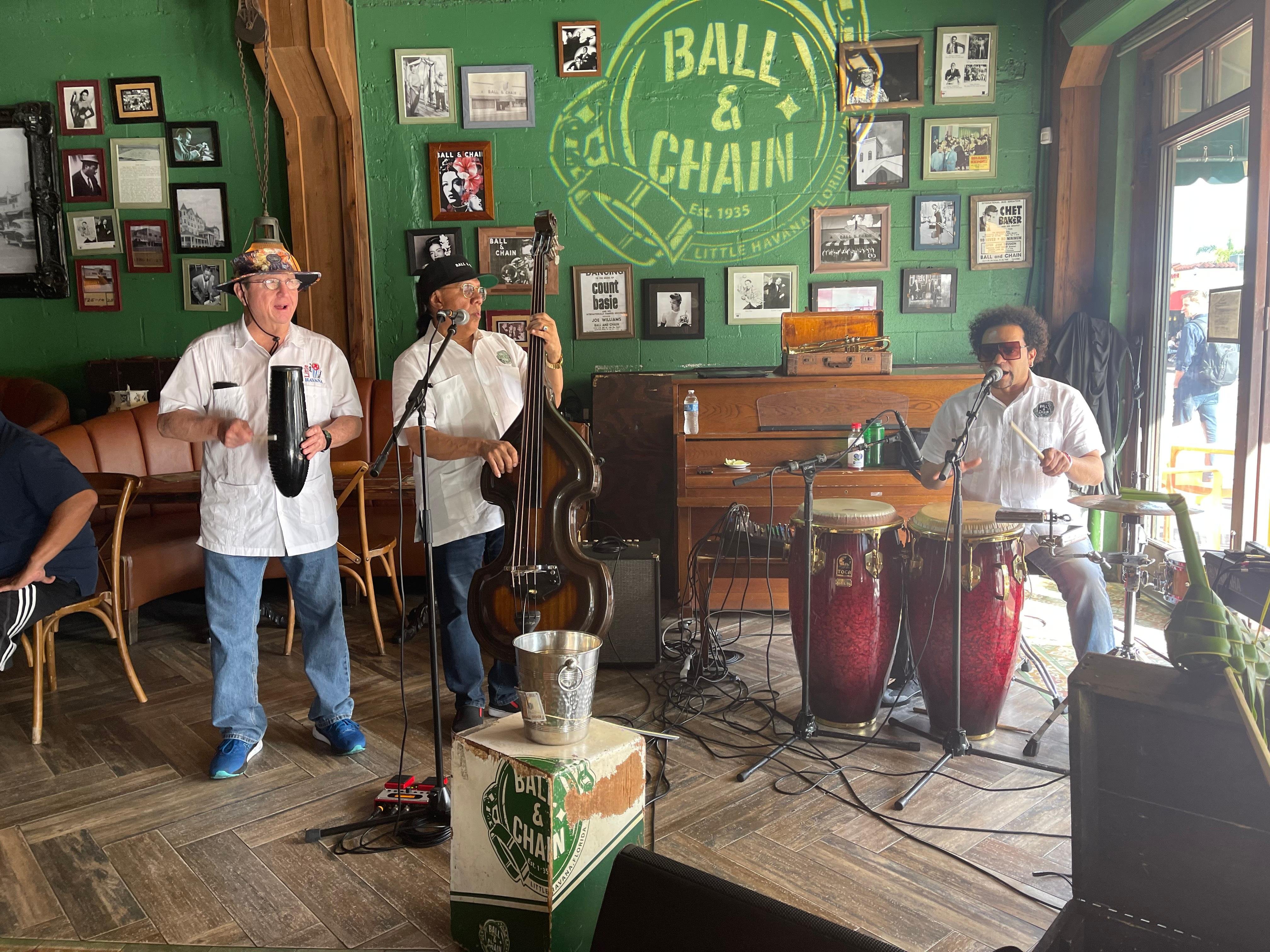
Ball & Chain nightclub reopens, reviving a 1930s-era institution and anchoring the neighborhood's cultural renaissance.
Capture the brass stars embedded in the sidewalk honoring Latin music legends like Celia Cruz between 12th and 17th Avenue.
This famous community hub features domino-decorated tile tables and a historic mural providing a classic backdrop for your little havana food and walking tour in miami.
An iconic 1926 Art Deco landmark that offers a vintage aesthetic with its neon marquee and historic facade.
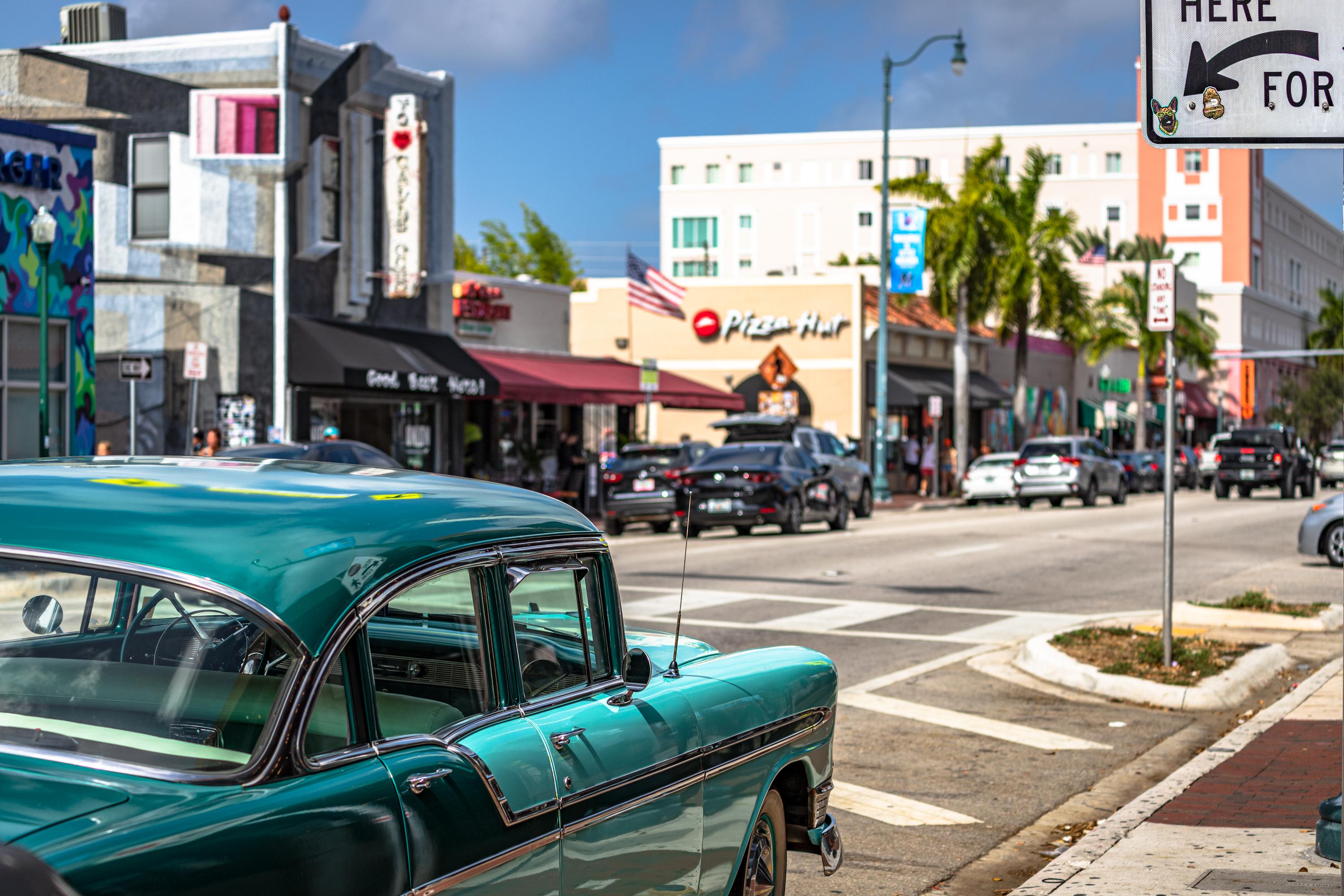
A colorful and tucked-away passage featuring street art and vintage cars that many visitors overlook.
The main street is lined with vibrant, large-scale wall art celebrating Cuban heritage that acts as a perfect setting for portraits.
Exploring the vibrant culinary landscape near your little havana food and walking tour in miami requires a stop at the neighborhood's iconic windows and family-owned eateries. From potent espresso shots at legendary walk-up counters to handcrafted tropical scoops, the area offers a sensory journey through traditional Cuban flavors.
An iconic landmark for traditional Cuban cuisine, famous for its mirrored walls, bustling atmosphere, and a popular ventanita serving cafecito and croquetas.;El Pub Restaurant
Real experiences from real travelers
Our guide led us through the heart of the neighborhood, stopping at family-run cafés and bakeries that have served the community for decades. The cortadito at Versailles was perfectly balanced, and the Cuban sandwich at a small ventanita was better than anything I found in more touristy areas. We learned about the exile community while sampling guava pastries and fresh sugarcane juice. A genuine cultural immersion that went beyond typical food tours.
This little havana food and walking tour in miami gave us access to places we never would have found on our own. Our guide grew up in the area and shared personal stories while we tasted croquetas, empanadas, and classic Cuban coffee. The cigar shop visit was fascinating, watching the roller work with such precision. Three hours felt perfectly paced, with enough walking to see the murals and architecture between food stops.
Walking through the streets on a warm morning, we sampled six different foods at locally owned spots. The guide explained the significance of each dish and how it connects to Cuban heritage. Domino Park was a highlight, watching the games while sipping cafecito. The portion sizes were generous, and by the end I was comfortably full. Great mix of tasting, walking, and learning about Miami's Cuban community.
The tour covered Calle Ocho from end to end, with stops at a bakery, two restaurants, and a fruit stand. Our guide was knowledgeable about the neighborhood's evolution since the 1960s. The food was consistently good, though one stop felt rushed because the restaurant was busy. I appreciated the smaller group size, which made it easy to hear the stories and ask questions about the area.
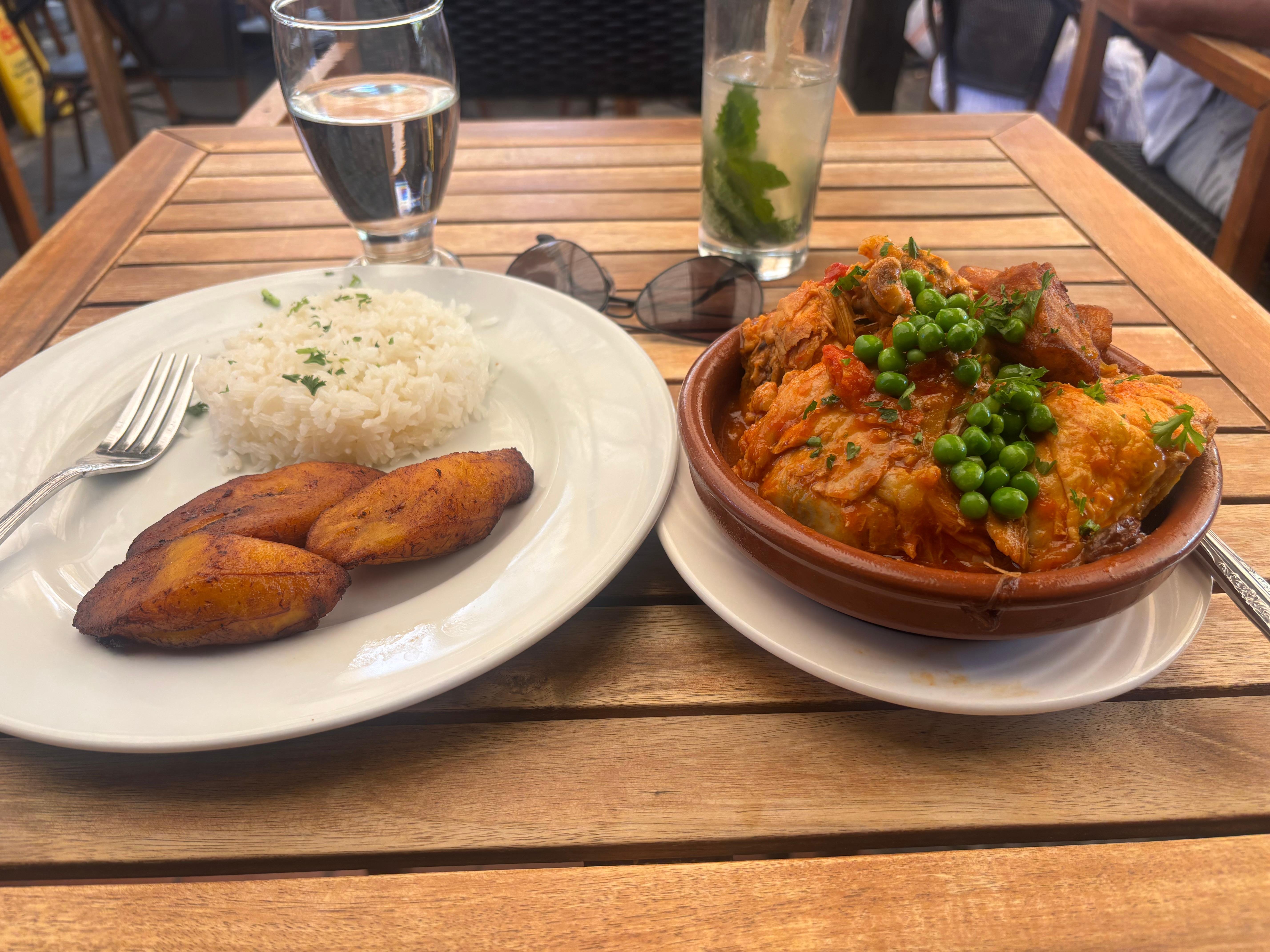
Every stop on this little havana food and walking tour in miami revealed something new about the Cuban diaspora and their culinary traditions. We tried ropa vieja, tostones, and flan at spots where locals actually eat, not tourist traps. The murals along Calle Ocho tell powerful stories, and our guide gave context to each one. The cigar demonstration was a bonus I did not expect. Left with a full stomach and deeper appreciation for the community.
I have taken food tours in several cities, and this ranks among the best. The guide balanced history, culture, and cuisine seamlessly. We visited a ventanita for cafecito, sat down for empanadas at a spot his family has frequented for years, and finished with tres leches at a bakery that opened in 1971. The walking pace was comfortable, with plenty of shade breaks. Perfect introduction to Little Havana's flavors and stories.
This tour took us beyond the main tourist corridor into residential blocks where you see the real neighborhood. The guide pointed out architectural details and explained how different waves of Cuban immigration shaped the area. Food-wise, every dish was prepared fresh and served with pride. The owner of one café sat with us and shared memories of opening the business. A warm, genuine experience that felt like visiting friends rather than a commercial tour.
We joined this little havana food and walking tour in miami on our last day in the city and wished we had done it first. Would have shaped how we explored Miami the rest of the week. The combination of tastings, neighborhood history, and local interaction made three hours fly by. Our guide answered every question with depth and humor. The Cuban sandwich alone was worth the booking, but the context and stories elevated the whole experience.
Walking Calle Ocho with a knowledgeable guide transformed what could have been a simple snack crawl into a cultural education. Each food stop came with stories about the families who run the businesses and the recipes they brought from Cuba. The guava pastries were still warm from the oven, and the mojito at our final stop was the best I have had. Small group size meant personalized attention and easy conversation.
This tour introduced us to the soul of Little Havana through its cuisine and the people who prepare it. We tasted chicharrones, yuca frita, and batidos while learning about the neighborhood's role as a cultural anchor for the Cuban community. The guide's connections meant we were welcomed into kitchens and got to see food being made. Left feeling like I understood Miami in a way I would not have from guidebooks alone.
Everything you need to know for your journey
The neighborhood is open 00:00–23:59, but individual tour operators set their own specific start times.
Ticket prices for a little havana food and walking tour in miami vary by operator and must be booked in advance.
The tour takes place on public sidewalks and is generally accessible, though some venues have steps.
The best arrival window for experiencing daytime local activity is 10:00–16:00.
Yes, the little havana food and walking tour in miami is family-friendly, provided children can handle the walking route.
Photography is permitted in public spaces during your little havana food and walking tour in miami.
Cancellations must be made at least 24 hours before your little havana food and walking tour in miami for a refund.
Yes, the little havana food and walking tour in miami includes curated tastings at featured stops.
You can arrive at Calle Ocho via public transport, taxi, or car, though parking is limited.
Entrance to the neighborhood is 0 USD, as it is a public area.
A famous gathering spot where locals play intense games of dominoes under shade.
An iconic Art Deco cinema showcasing international and independent films.
A somber and significant memorial honoring veterans of the 1961 invasion.
A popular stop known for inventive tropical flavors and Cuban influence.
A stylish hotel reflecting the neighborhood's artistic character.
Convenient lodging located in the heart of the historic district.
Various lodging options are found throughout the wider Miami area.
Join thousands of happy travelers who have discovered this incredible experience
Book Your Experience Now